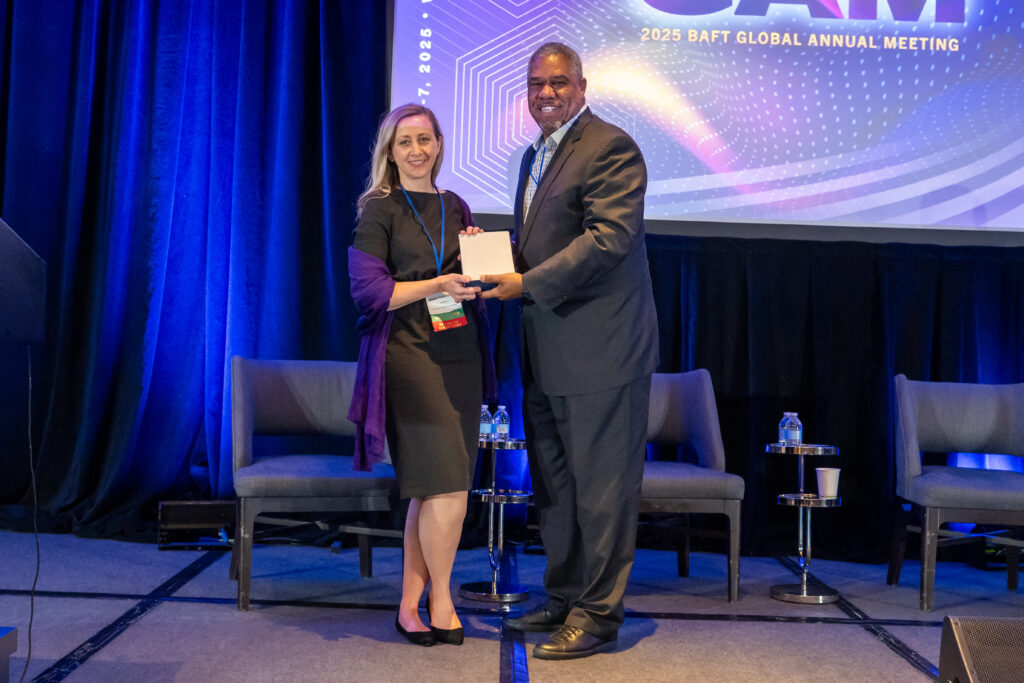
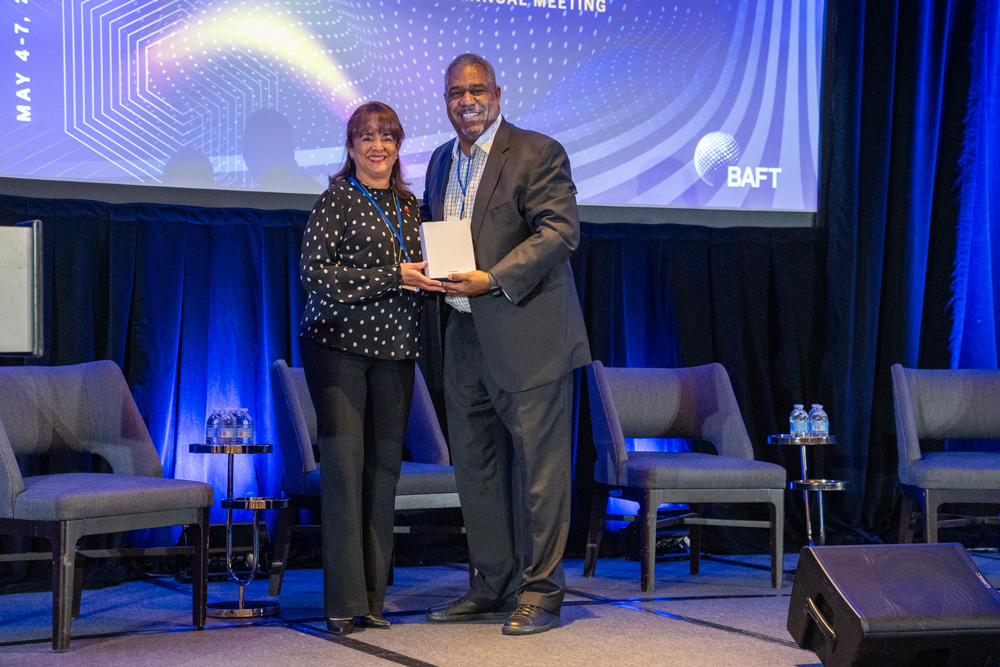
At the 2026 BAFT Europe Forum, held March 3-5 in London, bankers, technologists, and policymakers came together to discuss the trends shaping transaction banking in Europe and beyond. Over two days, sessions covered everything from geopolitics and European competitiveness to cross-border payments and the future of foreign exchange.
Perhaps the dominant theme running through the conference was an industry adjusting to change from multiple directions at once. Geopolitical tensions and shifting trade dynamics are influencing how banks think about risk and global connectivity. At the same time, rapid technological developments (from instant payments infrastructure to digital assets and AI) are pushing financial institutions to modernise systems and rethink long-established processes.
Taken together, the discussions showed a sector trying to balance stability with innovation. Banks are under pressure to improve speed, transparency, and efficiency for clients while also managing rising complexity in regulation, technology, and global markets.
Keynote Fireside Chat: European Competitiveness in a Fragmented World
The conference opened with a discussion about Europe’s economic competitiveness and the challenges it faces in today’s global environment. Geopolitical tensions and (what at the time was still only) the possibility of disruption to key shipping routes such as the Strait of Hormuz are prime examples of how quickly global events can affect things like energy prices, inflation, and trade.
The conversation made note of some of the deeper structural issues that persist in Europe’s economy. For instance, the continent still depends heavily on imported energy, and its economic growth has been slower than that of the United States and China in recent years. Further, while the European single market is undoubtedly large and important, an array of internal barriers between countries still limit its full potential.
The overall message was that Europe faces both risks and opportunities. While global uncertainty creates challenges, Europe also has strengths, including a large market, strong institutions, and a stable financial system that could support future growth if the right investments and reforms are made.
A View from the Top
For one of the Forum’s most anticipated sessions, an esteemed panel of global transaction banking leaders explored a range of topics shaping the industry today. The panel examined the strategic evolution of transaction banking, the coexistence of traditional and digital rails, investment in cloud-native and microservice infrastructures, and the importance of collaboration, tokenization, talent attraction, and client-centric innovation.
- Coexistence of Traditional and Digital Rails: Panelists agreed that traditional payment systems will coexist with new digital solutions for at least the next decade, requiring banks to invest in both legacy and next-generation technologies to stay relevant and meet client demands.
- Client-Driven Innovation: The transformation in transaction banking is driven by client requirements for visibility, real-time operations, and resilience, prompting banks to move from passive to active roles in orchestrating client systems.
- Collaboration and Industry Partnerships: The importance of collaboration among banks, including joint work on stablecoin development and participation in Swift Ledger, are important to address fragmentation of standards and deliver comprehensive solutions to corporate clients.
- Talent Attraction and Industry Positioning: Panel discussed the need to communicate the strategic importance of transaction banking to attract young talent, highlighting hybrid roles, innovation, and the engine-like function of transaction banking within banks and society.
- Tokenisation Technology and Use Cases: The panel noted that while tokenisation technology is available and offers new possibilities such as fractionalising US Treasuries and automating settlement, its adoption depends on identifying practical use cases and building market practices to enable scaled adoption.
Beyond Borders: How Innovation, DLT and Interoperability are Re-wiring Cross-Border Payments
Cross-border payments are under pressure to become better. For a lot of payment system users, that means they want them to simultaneously become faster, cheaper, and more transparent. The panel discussed the progress that has been made so far and the challenges that remain.
Industry initiatives such as the G20 roadmap and the adoption of ISO 20022 messaging standards have already improved payment systems, and today, many payments on the SWIFT network reach recipient banks within minutes. However, problems still appear in the “last mile” of the payment process, where local regulations and differences between countries can slow things down.
The panel also discussed the role of new technologies such as distributed ledger systems, with most participants agreeing that new payment rails will not completely replace existing systems, but rather that traditional infrastructure and new technologies will likely work together. Improvements may come from better use of current systems and stronger cooperation between regulators and institutions.
Risk, Resilience and Compliance – A Behind-the-Scenes Viewpoint
Another session, this one focussing on risk management and resilience inside banks, explored how institutions are responding to growing geopolitical uncertainty and more complex requirements from regulators.
Out of necessity, many banks are moving from reactive risk management toward a more integrated approach that assumes the present uncertainty will continue into the future. From a long-term planning standpoint, this makes it more desirable to invest in better monitoring systems and improved incident response processes. It will also pay to build stronger cooperation internally between risk, compliance, and technology teams.
The session made clear that resilience is becoming an important capability that allows banks to continue operating effectively while maintaining trust with regulators, clients, and partners.
The Voice of the Ultimate End User – The Global Corporates
Of course, it was important for the conference to include the perspective of corporates, since they are ultimately the end users of the banking systems and services being discussed. During this session, treasury leaders from several global companies shared how their expectations of banks are evolving as payments, liquidity management, and digital tools become more advanced.
One key message from the panel was the need for greater standardisation across the banking industry. Differences between banks in terms of areas like messaging standards, KYC requirements, and internal processes can create unnecessary complexity for corporate treasury teams that work with multiple banking partners.
While corporates are interested in new technologies such as artificial intelligence, the panel made it clear that technology alone is not the goal. What matters most is whether these innovations improve their experience, particularly related to reliability and ease of use. For corporate clients, the priority is still to have systems that work smoothly across banks and across borders.
Navigating the Future of FX: Innovation, Risk and Client Experience Transformation
Let’s end this summary with a glance into the future of foreign exchange. This panel focused on how FX markets are changing as payment systems become faster and progress towards instant settlement and 24/7 operation. New technologies such as tokenised assets, digital currencies, and AI-driven trading tools may influence how FX markets operate in the future. However, the core task of managing currency risk remains the same as it has always been.
The panel also discussed the need for cooperation between banks, market infrastructures, and technology providers as payments and settlements become faster. There was also general agreement that FX processes must adapt so that transactions remain stable and efficient for clients in this new technology-oriented world.
The discussion showed that FX markets will continue to play a central role in global finance, even as technology changes how money moves across borders.