Event News

A Recap of the 2026 BAFT Europe Forum

At the 2026 BAFT Europe Forum, held March 3-5 in London, bankers, technologists, and policymakers came together to discuss the trends shaping transaction banking in Europe and beyond. Over two days, sessions covered everything from geopolitics and European competitiveness to cross-border payments and the future of foreign exchange.

Perhaps the dominant theme running through the conference was an industry adjusting to change from multiple directions at once. Geopolitical tensions and shifting trade dynamics are influencing how banks think about risk and global connectivity. At the same time, rapid technological developments (from instant payments infrastructure to digital assets and AI) are pushing financial institutions to modernise systems and rethink long-established processes.

Taken together, the discussions showed a sector trying to balance stability with innovation. Banks are under pressure to improve speed, transparency, and efficiency for clients while also managing rising complexity in regulation, technology, and global markets.

Keynote Fireside Chat: European Competitiveness in a Fragmented World

The conference opened with a discussion about Europe’s economic competitiveness and the challenges it faces in today’s global environment. Geopolitical tensions and (what at the time was still only) the possibility of disruption to key shipping routes such as the Strait of Hormuz are prime examples of how quickly global events can affect things like energy prices, inflation, and trade.

The conversation made note of some of the deeper structural issues that persist in Europe’s economy. For instance, the continent still depends heavily on imported energy, and its economic growth has been slower than that of the United States and China in recent years. Further, while the European single market is undoubtedly large and important, an array of internal barriers between countries still limit its full potential.

The overall message was that Europe faces both risks and opportunities. While global uncertainty creates challenges, Europe also has strengths, including a large market, strong institutions, and a stable financial system that could support future growth if the right investments and reforms are made.

A View from the Top

For one of the Forum’s most anticipated sessions, an esteemed panel of global transaction banking leaders explored a range of topics shaping the industry today. The panel examined the strategic evolution of transaction banking, the coexistence of traditional and digital rails, investment in cloud-native and microservice infrastructures, and the importance of collaboration, tokenization, talent attraction, and client-centric innovation.

  • Coexistence of Traditional and Digital Rails: Panelists agreed that traditional payment systems will coexist with new digital solutions for at least the next decade, requiring banks to invest in both legacy and next-generation technologies to stay relevant and meet client demands.
  • Client-Driven Innovation: The transformation in transaction banking is driven by client requirements for visibility, real-time operations, and resilience, prompting banks to move from passive to active roles in orchestrating client systems.
  • Collaboration and Industry Partnerships: The importance of collaboration among banks, including joint work on stablecoin development and participation in Swift Ledger, are important to address fragmentation of standards and deliver comprehensive solutions to corporate clients.
  • Talent Attraction and Industry Positioning: Panel discussed the need to communicate the strategic importance of transaction banking to attract young talent, highlighting hybrid roles, innovation, and the engine-like function of transaction banking within banks and society.
  • Tokenisation Technology and Use Cases: The panel noted that while tokenisation technology is available and offers new possibilities such as fractionalising US Treasuries and automating settlement, its adoption depends on identifying practical use cases and building market practices to enable scaled adoption.

Beyond Borders: How Innovation, DLT and Interoperability are Re-wiring Cross-Border Payments

Cross-border payments are under pressure to become better. For a lot of payment system users, that means they want them to simultaneously become faster, cheaper, and more transparent. The panel discussed the progress that has been made so far and the challenges that remain.

Industry initiatives such as the G20 roadmap and the adoption of ISO 20022 messaging standards have already improved payment systems, and today, many payments on the SWIFT network reach recipient banks within minutes. However, problems still appear in the “last mile” of the payment process, where local regulations and differences between countries can slow things down.

The panel also discussed the role of new technologies such as distributed ledger systems, with most participants agreeing that new payment rails will not completely replace existing systems, but rather that traditional infrastructure and new technologies will likely work together. Improvements may come from better use of current systems and stronger cooperation between regulators and institutions.

Risk, Resilience and Compliance – A Behind-the-Scenes Viewpoint

Another session, this one focussing on risk management and resilience inside banks, explored how institutions are responding to growing geopolitical uncertainty and more complex requirements from regulators.

Out of necessity, many banks are moving from reactive risk management toward a more integrated approach that assumes the present uncertainty will continue into the future. From a long-term planning standpoint, this makes it more desirable to invest in better monitoring systems and improved incident response processes. It will also pay to build stronger cooperation internally between risk, compliance, and technology teams.

The session made clear that resilience is becoming an important capability that allows banks to continue operating effectively while maintaining trust with regulators, clients, and partners.

The Voice of the Ultimate End User – The Global Corporates

Of course, it was important for the conference to include the perspective of corporates, since they are ultimately the end users of the banking systems and services being discussed. During this session, treasury leaders from several global companies shared how their expectations of banks are evolving as payments, liquidity management, and digital tools become more advanced.

One key message from the panel was the need for greater standardisation across the banking industry. Differences between banks in terms of areas like messaging standards, KYC requirements, and internal processes can create unnecessary complexity for corporate treasury teams that work with multiple banking partners.

While corporates are interested in new technologies such as artificial intelligence, the panel made it clear that technology alone is not the goal. What matters most is whether these innovations improve their experience, particularly related to reliability and ease of use. For corporate clients, the priority is still to have systems that work smoothly across banks and across borders.

Let’s end this summary with a glance into the future of foreign exchange. This panel focused on how FX markets are changing as payment systems become faster and progress towards instant settlement and 24/7 operation. New technologies such as tokenised assets, digital currencies, and AI-driven trading tools may influence how FX markets operate in the future. However, the core task of managing currency risk remains the same as it has always been.

The panel also discussed the need for cooperation between banks, market infrastructures, and technology providers as payments and settlements become faster. There was also general agreement that FX processes must adapt so that transactions remain stable and efficient for clients in this new technology-oriented world.

The discussion showed that FX markets will continue to play a central role in global finance, even as technology changes how money moves across borders.
Trade, payments, and risk in a more fragmented environment

A recap of the 2026 BAFT International Trade and Payments Conference

The 2026 BAFT International Trade and Payments Conference, held February 3-5 in Jersey City, USA, brought together industry professionals and thought leaders from all corners of these interconnected domains to share ideas and network across the river from the city that never sleeps.

Overall, the theme of the conference seemed to be one of an industry adapting to rapid change. Geopolitical tension and tariff uncertainty are certainly hot topics in the room, but so were instant payments, always-on settlement, and the impact that both will have on liquidity and treasury. At the same time, discussions around digital assets, AI, and financial crime made attendees simultaneously excited and scared for the world that lies ahead.

Taken together, the discussions showed an industry trying to reconcile macro uncertainty on the outside and relentless technological change on the inside.

The G20 Global Roadmap: From Commitments to Real-World Change

There is still some distance between the G20’s targets and the reality that banks and clients face when it comes to cross-border payments. While progress has been made, the panel’s view was that the 2027 goals will be difficult to meet in full because the remaining barriers are with the “last mile”, where delays are most visible to end clients and least consistent across corridors.

The panel argued that the most meaningful gains in the next year are likely to come from stronger adherence to existing standards (like ISO 20022) rather than new systems. Richer data can reduce friction, but only if fields and market practices are harmonised across jurisdictions.

Even if the G20 goals are met, the panel does not expect stablecoins to disappear because they offer different features, including programmability and 24/7 settlement, and they will likely coexist with traditional rails as payments and the landscape they sit in continue to diversify.

Redrawing the Global Map: How Geopolitics Is Reshaping Trade Routes

Geopolitical tension, the undeniable elephant in the trade room over the past year, is beginning to have a tangible impact on real-world business in the form of reshaped trade routes. And the disruption extends beyond the immediate point of disturbance.

When security risks affect corridors such as the Red Sea, the impact is rarely limited to that stretch of water, but extends across multiple lanes because global shipping operates as an interconnected system.

Often, it is the corporate decision makers, guided by these geopolitical pressures, that determine where and how goods will eventually move. For example, combined sea and overland routes between the Gulf and the Eastern Mediterranean are starting to be used as alternatives to traditional shipping lanes.

These shifts carry direct implications for the banks involved in those transactions. Indeed, supporting an established supply chain differs from supporting a reconfigured one, particularly where new counterparties and jurisdictions are involved.

For institutions in the room, the takeaway was that corridor insight is becoming central to trade banking strategy. Understanding where trade is moving and how those movements alter risk and liquidity dynamics is increasingly necessary for pricing, capital allocation, and client support in a more fragmented environment.

Payments & Trade on the Blockchain Frontier: Stablecoins, Tokenization and Liquidity in the GENIUS Era

While the technology behind stablecoins and tokenised deposits has begun attracting more attention again, institutions are increasingly focusing on solving core client problems, particularly in areas such as cross-border payments and liquidity management.

These two technologically driven forms of payments differ from each other and have their own respective benefits and drawbacks. Stablecoins can be programmed and transferred at all hours of the day and night, making them highly flexible and adaptable to the emerging applications of today’s always-on digital world. Tokenised deposits, on the other hand, are a more familiar entry point for regulated institutions seeking to extend their existing deposit models into digital environments. Regulatory developments, including frameworks such as the GENIUS Act, are central to shaping the path to widespread adoption that these will be able to take.

The overall takeaway was that digital money models are advancing, but adoption will depend on clear use cases, regulatory clarity, and the ability to move into scalable solutions that fit within existing treasury and payments operations.

Intelligent Agents, Intelligent Risks: The Next Frontier of AI in Payments

It has certainly been hard to miss all the conversations around the impact that AI will have on the industry. This panel specifically focused on the role of Agentic AI and the changes that it may bring for international payments.

It is important to remember that AI does not fix broken processes. Firms experimenting with agent-based models are finding that their success or failure depends less on the sophistication of the model itself and more on the underlying data structure and governance that allow humans to intervene when necessary. Participants noted that data consolidation across legacy platforms remains one of the biggest barriers to scaling meaningful AI adoption.

If viewers left this session with one takeaway, it was that intelligent agents are beginning to reshape payments models, but that the pace and shape of subsequent progress will depend on design and governance choices that are made today. The technology can accelerate decision-making, but without strong controls, it can accelerate mistakes just as quickly.

In today’s increasingly volatile geopolitical environment, the risks associated with proliferation financing are more relevant than they have ever been. Proliferation financing concerns the funding of weapons of mass destruction and dual-use goods. Typically, it involves transactions that are structured to appear routine while camouflaging the fact that they are really supporting the movement or payment of controlled components.

Trade-based methods are particularly useful for criminals because they can allow large values to move within legitimate commercial flows. Instruments such as standby letters of credit, layered invoicing, mislabelled goods, and circuitous routing can obscure the true purpose of a nefarious transition behind the facade of a seemingly ordinary trade activity.

Since institutions are being asked to detect risks that often sit deep within trade documentation, effectively mitigating the risks of proliferation financing requires having access to reliable reference sources and a risk-based framework that integrates AML and counterterrorist financing with proliferation financing.

Decision makers would be wise to heed the warning that when it comes to proliferation financing, technology is not a silver bullet. While digital tools can assist with detection, they are ill suited to replace the informed judgment of seasoned trade professionals (employing what many would refer to as the ‘sniff test’). In a domain where mistakes can lead to dangerous goods entering the hands of dangerous people, maintaining robust processes and training is more critical than ever.

BAFT Recognizes 2025 Ambassador of the Year Honorees at Global Annual Meeting

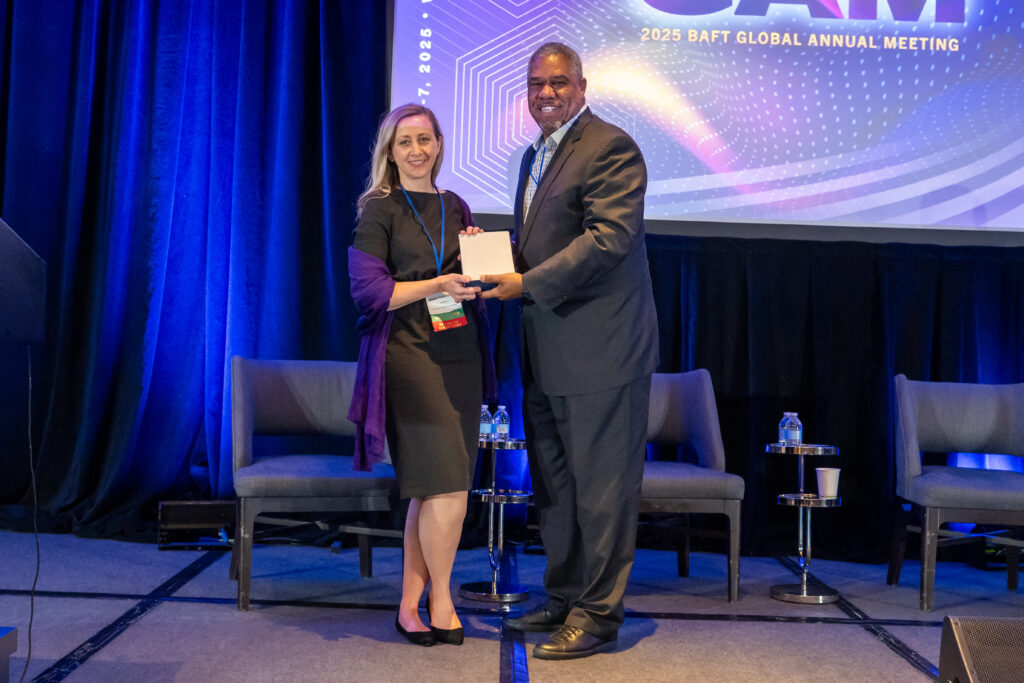
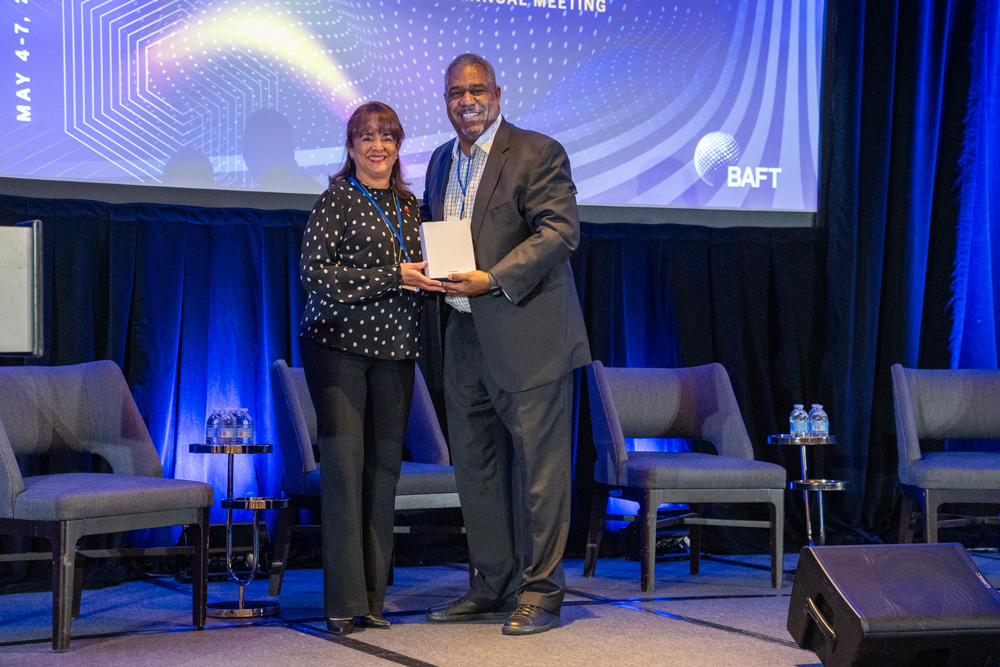
Announced at the 2025 Global Annual Meeting in Washington, DC on May 6, BAFT is proud to recognize the following individuals for their outstanding contributions to the association over the past year.

  • Miriam Ratkovicova, Managing Director, Deloitte Transactions and Business Analytics, LLP
  • Emy Ruiz, SVP, Head of Global Transaction Banking, Fifth Third Bank

BAFT honors members who have generously volunteered their time and expertise to support the association’s mission and continue to drive the vision forward. Selected through a staff-led voting process, the BAFT Ambassador of the Year Award celebrates those who have made a significant impact on the association in 2025. The awards were presented during the BAFT Global Annual Meeting.

Miriam Ratkovicova
Emy Ruiz

BAFT Congratulates Graduates of the 2025 Future Leaders Program

WASHINGTON – BAFT, the leading global financial services association for international transaction banking, today announced the graduates of its Future Leaders program class of 2025. The program – now completing its 10th year – recognizes upcoming leaders in the global transaction banking industry. The Future Leader graduates were honored at an in-person ceremony in Washington, D.C. on May 6 as part of BAFT’s 2025 Global Annual Meeting.

Nominated by their respective institutions, the class of 2025 included 40 individuals from 17 countries across the Americas, Europe, Asia, MENA and Africa, representing a variety of disciplines within transaction banking. The class of 2025 was divided into five project teams tasked with addressing current industry issues, including artificial intelligence threats for trade finance fraud, accelerating cross-border real-time payments across major corridors, BRICS, operating model for corresponding banking, and an update on the almost 300 graduates from the program.

“This program has exceeded our expectations when we started it 10 years ago,” said Tod Burwell, BAFT president and CEO. “I continue to be impressed with the caliber of participants and value of their work.  Congratulations to this year’s class for extending the traditions.”

BAFT congratulates the following graduates from the class of 2025:

  • Elif Seray Akin, ING Bank
  • Adel AlZarooni, First Abu Dhabi Bank (FAB)
  • Mafalda Arnaud, Société Générale
  • Viktor Bakkioui, Skandinaviska Enskilda Banken (SEB)
  • Ayush Bhandari, Crown Agents Bank
  • Peyton Boles, First-Citizens Bank
  • Daranee Bolger, NatWest
  • Saad Chemseddine, BNP Paribas
  • Kevin Chu, RBC Capital Markets (Royal Bank of Canada)
  • Maximillian Chua, Standard Chartered Bank
  • James Deneault, TD Securities
  • Olivia Ellis, BNP Paribas
  • Laura Ernst, StoneX
  • Serena Fazzini, UniCredit
  • Harrison Gutman, PNC Bank
  • Gentiana Halimi, Banka Kombetare Tregtare Kosove
  • Jeronimo Hernandez, Bank of America
  • Ajay Joshi, Credit Agricole Corporate & Investment Bank
  • Tina Kim, JPMorgan Chase Bank
  • Srushthi Kshirsagar, ANZ Bank
  • Tapiwa Kuipa, African Export-Import Bank (Afreximbank)
  • Carmen Landeras Cabrero, Santander Corporate & Investment Banking
  • Audrey Lees, HSBC Bank
  • Xiaosu (Charles) Liang, American International Group (AIG)
  • Yuriy Lobanov, Commerzbank
  • Carlos Martínez Illán, Banco Bilbao Vizcaya Argentaria (BBVA)
  • Wan Chung Arick Ng, Bank of America
  • Awuzhaer Nijiati, ING Bank
  • Abigale Ning, Standard Chartered Bank
  • Oskar Nordlander, Skandinaviska Enskilda Banken (SEB)
  • Álvaro Ocampo, Banorte (Banco Mercantil del Norte)
  • Israel Ortigas, Bank of New York
  • Heidi Pun, ANZ Bank
  • Carmen Maria Ramirez Ortiz, Asian Development Bank
  • William Rattray, JPMorgan Chase Bank
  • Renan Reinoso, SMBC
  • Erik Rost, Citi
  • Elena Rozas, Santander Corporate & Investment Banking
  • Christopher Selfe, Barclays
  • Yang Wu, Bank of China

The whitepapers from each project team are available for members to download for free by the end of May, and a series of webinars on each project will run in June.

About BAFT

BAFT, the leading global financial services association for international transaction banking, helps bridge solutions across financial institutions, service providers and the regulatory community that promote sound financial practices enabling innovation, efficiency, and commercial growth. BAFT engages on a wide range of topics affecting transaction banking, including trade finance, payments, and compliance. The association website is www.baft.org.

BAFT Announces Future Leaders Program Class of 2025

Launched in 2015, the 2025 Future Leaders class includes 40 individuals from 17 countries representing a variety of disciplines within transaction banking around the globe.

WASHINGTON — BAFT, the leading global financial services association for international transaction banking, today announced its Future Leaders Program class of 2025. Now in its tenth year, the program recognizes upcoming talent in the global transaction banking industry.

This year’s pool of applicants who were nominated by their respective institutions broke last year’s previous record. The selected class of 2025 includes 40 individuals from 17 countries across the Americas, Europe, Asia, MENA and Africa, representing a variety of disciplines within transaction banking.

The class of 2025 was divided into five project teams tasked with addressing current industry issues, including artificial intelligence threats for trade finance fraud, accelerating cross-border real-time payments across major corridors, BRICS, operating model for corresponding banking, and an update on the almost 300 graduates from the program.

BAFT board and regional council members serve as project sponsors and future leader alumni support the teams as mentors. The class will meet in person at the BAFT Europe Bank to Bank Forum in March and will graduate at the BAFT’s Global Annual Meeting in May. 

“Over the last decade, this program has recognized and facilitated the continued growth of some of the top talent in our industry,” said Tod Burwell, president and CEO, BAFT. “The participants have a unique opportunity to expand their knowledge of industry topics outside the scope of their day-to-day responsibilities and provide insights that collectively lead to innovative approaches.”  

BAFT congratulates the following individuals who were selected to this year’s program:

  • Elif Seray Akin, ING Bank
  • Adel AlZarooni, First Abu Dhabi Bank (FAB)
  • Mafalda Arnaud, Société Générale
  • Viktor Bakkioui, Skandinaviska Enskilda Banken (SEB)
  • Ayush Bhandari, Crown Agents Bank
  • Peyton Boles, First-Citizens Bank
  • Daranee Bolger, NatWest
  • Saad Chemseddine, BNP Paribas
  • Kevin Chu, RBC Capital Markets (Royal Bank of Canada)
  • Maximillian Chua, Standard Chartered Bank
  • James Deneault, TD Securities
  • Olivia Ellis, BNP Paribas
  • Laura Ernst, StoneX
  • Serena Fazzini, UniCredit
  • Harrison Gutman, PNC Bank
  • Gentiana Halimi, Banka Kombetare Tregtare Kosove
  • Jeronimo Hernandez, Bank of America
  • Ajay Joshi, Credit Agricole Corporate & Investment Bank
  • Tina Kim, JPMorgan Chase Bank
  • Srushthi Kshirsagar, ANZ Bank
  • Tapiwa Kuipa, African Export-Import Bank (Afreximbank)
  • Carmen Landeras Cabrero, Santander Corporate & Investment Banking
  • Audrey Lees, HSBC Bank
  • Xiaosu (Charles) Liang, American International Group (AIG)
  • Yuriy Lobanov, Commerzbank
  • Carlos Martínez Illán, Banco Bilbao Vizcaya Argentaria (BBVA)
  • Wan Chung Arick Ng, Bank of America
  • Awuzhaer Nijiati, ING Bank
  • Abigale Ning, Standard Chartered Bank
  • Oskar Nordlander, Skandinaviska Enskilda Banken (SEB)
  • Álvaro Ocampo, Banorte (Banco Mercantil del Norte)
  • Israel Ortigas, Bank of New York
  • Heidi Pun, ANZ Bank
  • Carmen Maria Ramirez Ortiz, Asian Development Bank
  • William Rattray, JPMorgan Chase Bank
  • Renan Reinoso, SMBC
  • Erik Rost, Citi
  • Elena Rozas, Santander Corporate & Investment Banking
  • Christopher Selfe, Barclays
  • Yang Wu, Bank of China

Learn more about BAFTs Future Leader Program here.

About BAFT

BAFT, the leading global financial services association for international transaction banking, helps bridge solutions across financial institutions, service providers and the regulatory community that promote sound financial practices enabling innovation, efficiency, and commercial growth. BAFT engages on a wide range of topics affecting transaction banking, including trade financepayments, and compliance.

BAFT Media Contact:
Mike Townsend
Senior Director, Public Relations
[email protected]
+1 (202) 663-5471

Follow Us: @BAFT

BAFT Recognizes 2024 Ambassador of the Year Honorees at Global Annual Meeting

Officially announced at the 2024 Global Annual Meeting, BAFT is honored to recognize the following individuals as Ambassadors of the Year for their invaluable contribution to the association and for continuously driving the mission and vision forward.

  • Kenneth Wong, Director, Global Transaction Banking, TD Bank
  • Renata Vilanova Lobo, Managing Director & Global Clearing Head of Payments, JP Morgan
  • Amy Sahm, Senior Vice President and Manager, International, Fulton Bank
  • Brian Gordon, Senior Vice President and Manager, International Banking, Commerce Bank

Ambassador of the Year Honorees are individuals representing member organizations recognized by BAFT on an annual basis. Following nomination submissions, annual honorees are chosen through a weighted voting process by BAFT staff.

We would like to thank each of the award recipients for their dedication and recognize their organization’s commitment to the advancement of transaction banking.

Honorees received their official awards at the 2024 Global Annual Meeting.